
Koichi HASHIMOTO
About
Selected for the FY2021 Grant-in-Aid for Transformative Research Areas (A). Hierarchical Bio-Navigation Integrating Cyber-Physical Space
Received the 2021 SICE (Society of Instrument and Control Engineers) Best Paper Award. 3D Measurement Based on Row-wise LT Matrix Estimation
Received MEXT Minister's Award. Research on Visual Servoing
Mechanical Engineering Article. 動く生物も止まって見える (JP)
Researchers, on the Move: Explaining the Principles of Behavior Through Mathematical Models (JP)
Research
Background
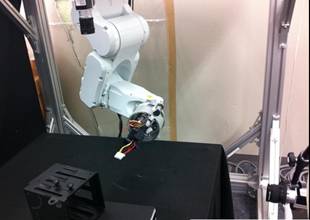
Our laboratory conducts research in robotics, computer vision, control engineering, and related fields. Numerous robots are utilized across various production sites and factories, including automobiles, smartphones, information devices, and various home appliances. Since the advent of the era of high-mix low-volume production, the importance of robots has grown increasingly significant. This is because when production models change, robots can read information from CAD, automatically determine the necessary movements for that model through programming, and perform tasks accurately using sensors. From steel mills and railways to automobiles and elevators, our homes and lives are filled with robots. It's not just the Roomba; air conditioners, washing machines, and even our bathtubs are a kind of robot. Beyond robot manufacturers, automakers, electronics companies, and heavy industry, Google, Amazon, and Softbank have all entered the robotics field. Isn't that exciting?
Computer Vision
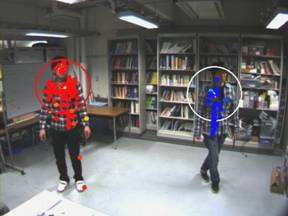
Computer vision is a research field that uses various sensors such as digital cameras, projectors, Kinect, and accelerometers to recognize the shape and position of objects. It can also be applied to facial recognition and game control as an interface between computers and humans. In smartphone apps, it is widely used for camera-based personal authentication and 3D mapping. Recognizing complex 3D objects, such as buildings and faces, is a very hot and rewarding research topic. Utilizing sensors like cameras for robot control or production system design enables flexible assembly and visual inspection of diverse objects. The industry giants Apple, Google, Microsoft, Sony, Toshiba, Hitachi, Mitsubishi (etc.) are all engaged in fierce competition.
Applications of Visual Servoing
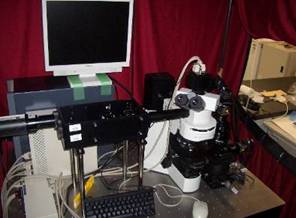
Robotics plays a crucial role in optical microscopy, which is indispensable in the fields of medicine, biology, and chemistry. To elucidate the operational principles of an animal's nervous and muscular systems, it is necessary to precisely measure what the animal senses, how it makes decisions, and how it acts. More specifically, this requires devices that are capable of tracking moving animals, stimulating brain cells, and quantitatively measuring cellular activity in nerves, muscles, and other tissues. Sensing, image analysis, and motor control are precisely what robotics is about. Here at the Hashimoto lab, we are conducting joint research with academics in medicine, neuroscience, and biology, as well as with projector, microscope, and camera manufacturers.
To Students Considering Applying to our Laboratory
Due to the mandatory retirement age, we no longer accept international students.
Research Papers
History
- 2023 Fellow of The Japan Society of Mechanical Engineers
- 2021-2022 Vice President of The Robotics Society of Japan
- 2019 Fellow of The Robotics Society of Japan
- 2015-2024 Vice Dean of the Graduate School of Information Sciences, Tohoku University
- 2018、2019 Office of the President and Provost, Tohoku University
- 2016 Director of The Robotics Society of Japan, Chair of the Journal Editorial Committee
- 2015 Director of The Robotics Society of Japan, Vice Chair of the Journal Editorial Committee, Member of the Paper Review Subcommittee
- 2014 Fellow of The Society of Instrument and Control Engineers
- 2013 Executive Director, Chairperson of the Departmental Council of The Society of Instrument and Control Engineers
- 2012 Director of The Society of Instrument and Control Engineers
- 2011、2012 Specially Appointed Assistant to the President of Tohoku University
- 2010 Chairperson of the SI Division Conference, The Society of Instrument and Control Engineers, Chairperson of SI International
- 2004 Appointed as Professor of the Department of System Information Sciences, Graduate School of Information Sciences, Tohoku University
- 2002-2009 JST Strategic Basic Research Program (Japan Science and Technology Agency): Sakigake, SORST Researcher (Solution-Oriented Research for Science and Technology)
- 2000 Assistant Professor, Department of Mathematical Engineering
- and Information Physics, Graduate School of Engineering, The University of Tokyo
- 1997 Associate Professor, Department of Systems Engineering, School of Engineering, Okayama University
- 1994 Lecturer, Department of Mechanical Engineering, Okayama University
- 1990 Assistant Professor, Department of Electronic Control and Mechanical Engineering, Faculty of Engineering, Osaka University
Educational Background
- 1990 Doctor of Philosophy (PhD) in Industrial Mechanical Engineering
- 1987 Master's Degree in Control Engineering, Department of Physics, Field of Control Engineering
- 1985 Bachelor's Degree in Engineering (BEng), Department of Control Engineering, Osaka University
- 1981 Graduated from Tenri High School
Projects
- Grant-in-Aid for Scientific Research
- Research Project Database
Lectures and Courses
- Control Engineering I
- Intelligent Control Systems
- Systems Control Engineering
Graduate School of Information Sciences, Tohoku University
6-6-01 Aramaki Aza Aoba, Aoba-ku, Sendai 980-8579, Japan
Email: koichi.hashimoto.a8 (followed by the common address for Tohoku University)
Phone/Facsimile: +81-22-795-7018